Knowledgebase Article
Organising Your Product Catalogue
Category: Configuration | Module: ProductPro | Created: 10/11/2024 | Last Updated: 9/6/2026
A catalogue of a few hundred products only stays usable if it is organised. Three things do most of that work: categories, vendors and keeping retired products out of the way.
All of it lives under Product Admin on the Admin menu.
Categories
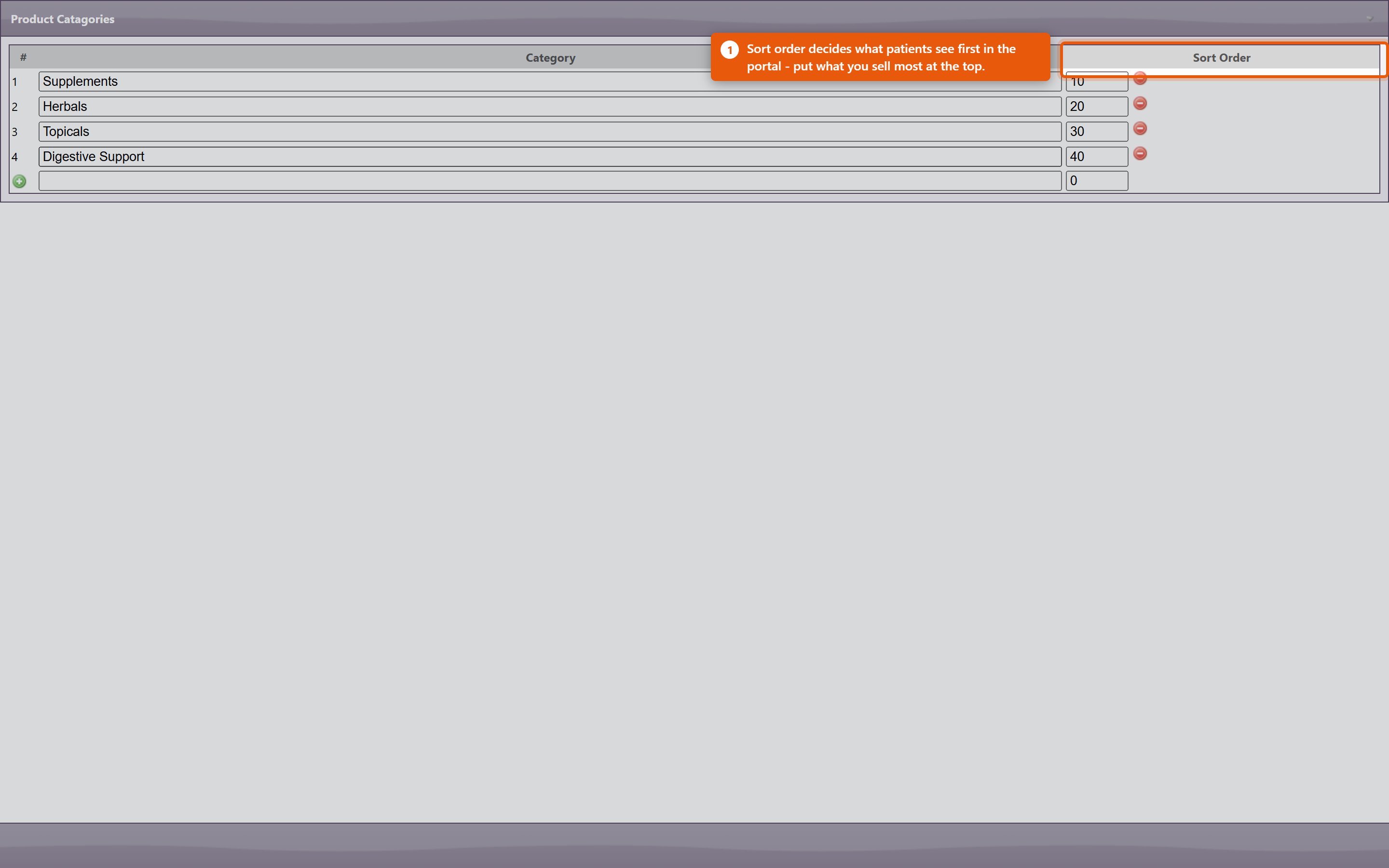
Categories group products for browsing - both for your own staff and for patients in the portal, where they are the main way anyone finds anything. Each category carries a sort order, so the ones you sell most can sit at the top rather than falling alphabetically.
Keep them broad. A category holding two products is not helping anyone find anything, and a catalogue with forty categories is harder to navigate than one with eight.
Vendors
Recording the vendor on a product is what makes Filter By Vendor useful on the Product Administration page. That filter is how you work through a delivery, review one supplier's pricing, or find everything affected when a supplier discontinues a line.
It also drives purchase orders: a product with no vendor cannot be ordered through the normal PO process.
Finding things
- Search Products - part of a name or product code, then Go. Quickest when you know roughly what you want.
- Filter By Vendor - everything from one supplier.
- Select by First Letter - for browsing rather than searching.
- Clear - drops the current filter. Worth knowing, because a filter left on is the usual reason a product appears to have vanished.
Product codes
Product codes identify a product across orders, inventory and reports. Keep them consistent and do not reuse a code from a retired product - reports covering both periods will silently merge the two.
Duplicates
Duplicates appear naturally: the same supplement gets added twice under slightly different names, or an import creates a second copy. They split your stock figures and your sales history, so the same product looks like two half-selling ones.
The Duplicate Products report under Reports lists catalogue entries that look like duplicates. Work through it occasionally rather than waiting for the figures to confuse someone - and when you find a pair, make one inactive rather than deleting it, so the sales already recorded against it survive.
Retired products
Make products you no longer sell inactive. They come out of the lists and out of the portal while everything already sold keeps its history. Deleting a product breaks that history, which is why it is almost never the right choice.
Keeping it tidy
A quarterly pass costs very little and prevents most catalogue problems:
- Run Duplicate Products and resolve anything it finds.
- Make inactive anything you have not sold in a year and do not intend to restock.
- Check that products you keep in stock have a Reorder Level - without one they never appear in the reorder lists.
- Check that anything sold through the portal has an image and a description worth reading.