Knowledgebase Article
Creating a Deposit
Category: Training | Module: OfficePro | Created: 10/2/2024 | Last Updated: 9/6/2026
A deposit groups the payments you are banking together so that what OfficePro shows matches what appears on your bank statement. Without it you have a list of individual payments and a bank line for the total, and no way to tie one to the other.
Create a deposit
- Open Deposits and choose Create Deposit.
- Set the date and, where you bank to more than one account, the account.
- Use Add Items to this Deposit to see payments not yet banked. Tick the ones going in, then Add Selected Payments.
- Check Deposit Total against the money in your hand or the card settlement.
The list can be narrowed by period - Today, This week, Last Week, This Month and so on - which is the quickest way to find the payments for the day you are banking.
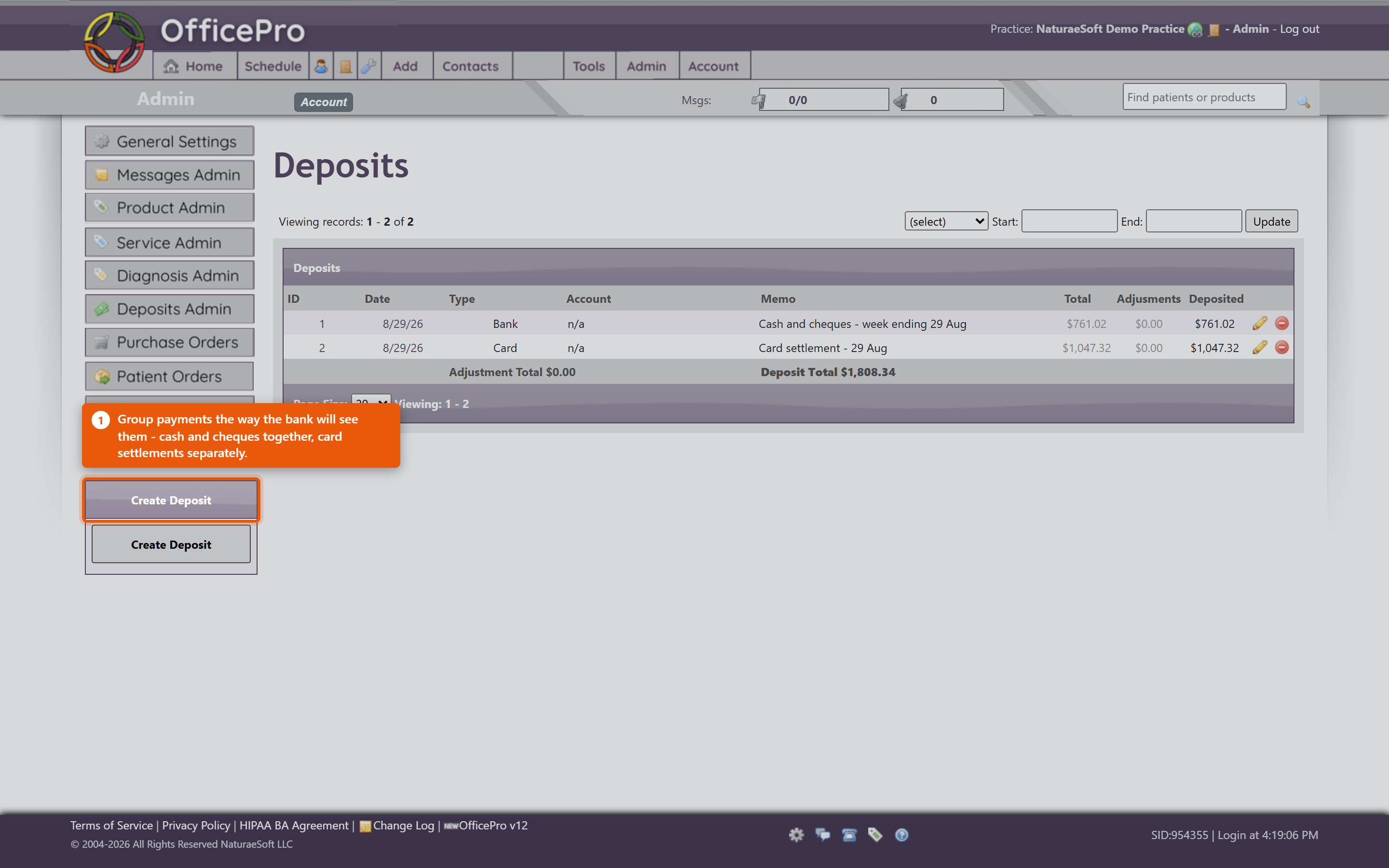
Group payments the way the bank will see them. Cash and cheques banked together belong on one deposit; card settlements arrive separately and belong on their own, or the totals will never line up.
When the total does not match
Use Deposit Adjustment and enter the Adjustment Amount - for a bank fee, a rounding difference, or a cheque returned unpaid. Record what it was for. An unexplained adjustment is indistinguishable from an error when someone reviews it later.
Remove Payment takes a payment back out if it was included by mistake; it returns to the list of unbanked payments rather than being deleted.
Print the slip
Produce the deposit slip for the bank, with Payee and Memo as needed. You will see Deposit Slip Created Successfully when it is generated. Take the printed slip to the bank with the money.
Auto Create Deposits
Auto Create Deposits builds deposits from unbanked payments rather than ticking them by hand. It saves time for a practice banking on a regular rhythm - but check what it produced before printing, because it groups by its own rules and not by what is physically in your hand.
Habits that keep it reconciled
- Bank on a schedule, daily or weekly. Payments that sit unbanked for a month are very hard to match afterwards.
- One deposit per bank line. If the bank shows one figure, one deposit should account for it.
- Explain every adjustment at the time.
- Check the total before printing, not after the bank disagrees.
Deposits cover money leaving your hands for the bank. Whether each payment is attached to the right visit is separate - see Managing Payments, Discounts and Write-Offs. A payment can be correctly banked and still not allocated to a visit, which is why a patient can appear to owe money they have already paid.